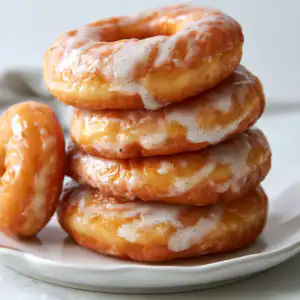
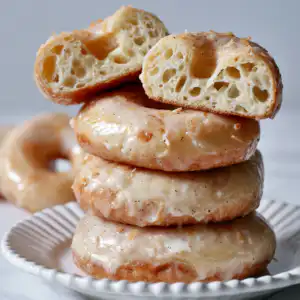
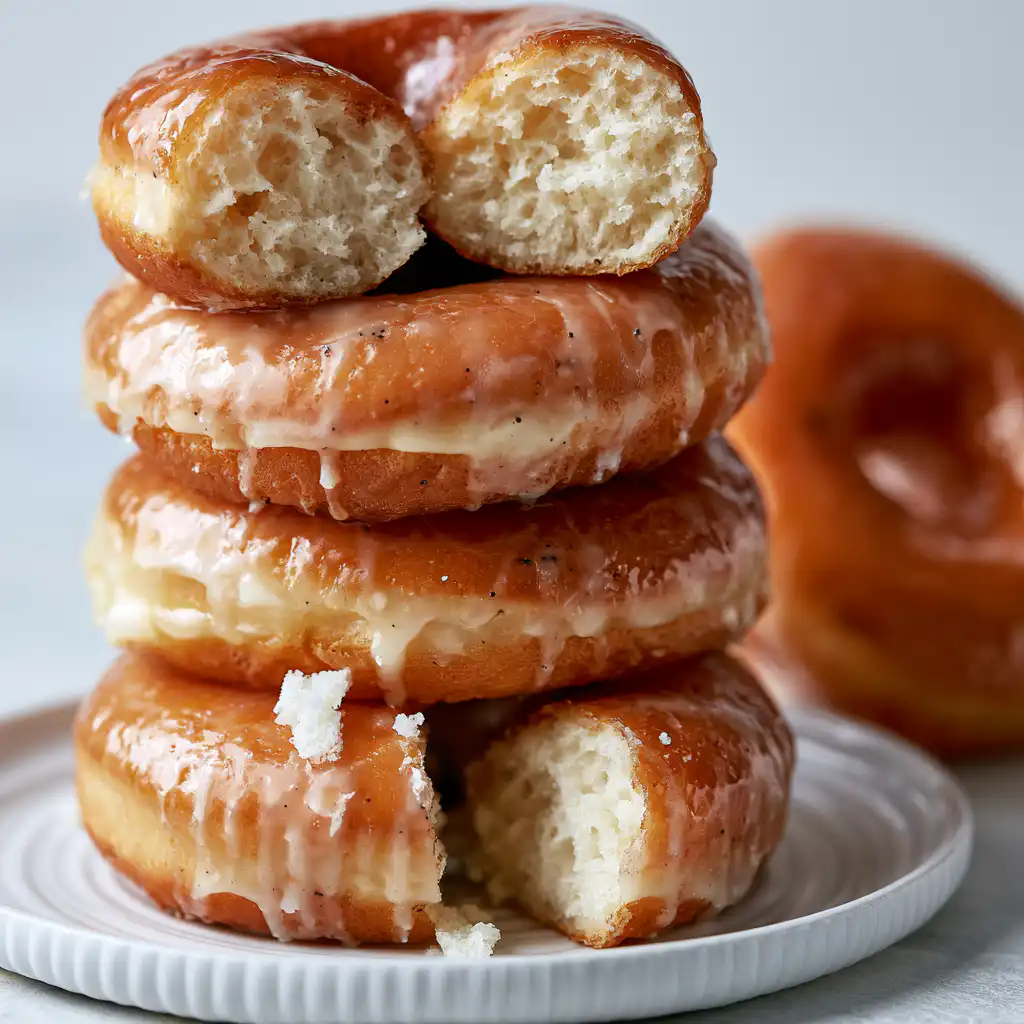
There’s just something magical about a weekend morning, isn’t there? For me, it often involves the comforting aroma of something sweet baking, or in this case, frying! I remember the first time I tried making homemade donuts with sourdough; it felt like a big step, but the result was so incredibly rewarding. These aren’t just any donuts; this Sourdough Donut Recipe brings a unique depth of flavor and an amazing texture that store-bought just can’t match. They’re a labor of love, yes, but every bite is worth it, I promise!
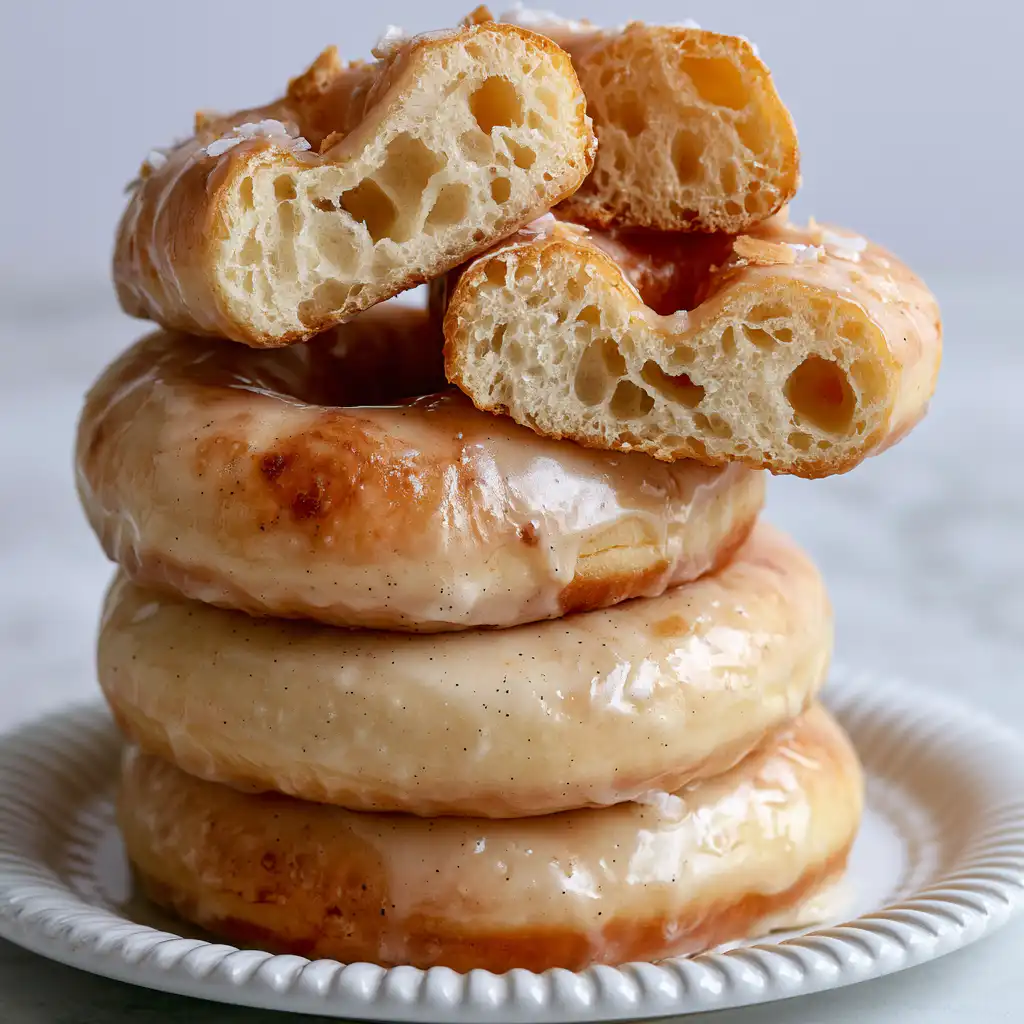
Why You’ll Love This Sourdough Donut Recipe
- They have the most incredibly soft, pillowy texture thanks to the sourdough and tangzhong.
- The flavor is subtly complex, with that hint of sourdough tang balancing the sweetness perfectly.
- It’s a really fun baking project that feels super impressive to share with friends and family.
- These donuts are perfect for a special brunch, a weekend treat, or just because you deserve something delicious!
Ingredients You’ll Need
- Sweet Stiff Starter: This is your secret weapon for super fluffy, less tangy donuts. It’s an unfed starter, milk, sugar, and bread flour mixed together. Don’t skip it if you want that perfect texture!
- Tangzhong: A Japanese technique where you cook milk and flour into a paste. This little trick makes the donuts incredibly soft and keeps them fresh longer.
- Bread Flour: The higher protein content in bread flour gives these donuts their amazing chewiness and structure. All-purpose flour might work, but bread flour is best for that classic donut texture.
- Unsalted Butter: Room temperature butter incorporates smoothly into the dough, making it rich and tender.
- Neutral Oil for Frying: You’ll need something with a high smoke point like vegetable, canola, or sunflower oil.
- Vanilla Paste or Extract: Vanilla paste gives a more intense vanilla flavor with those lovely specks, but pure vanilla extract works beautifully too.
How to Make Sourdough Donut Recipe Step by Step
Making these donuts starts the night before, so plan ahead! First, you’ll create your sweet stiff starter by mixing your unfed starter with warm milk and sugar, then adding bread flour. Knead it until it’s smooth, cover it, and let it triple in size. This can take about 12 hours in a 70°F kitchen, so patience is key here. You want it domed, sweet-smelling, and full of little air pockets when you tear it.
The next morning, you’ll make the tangzhong. This is a simple but crucial step! Whisk milk and flour in a saucepan over medium heat until it forms a thick paste, about 4-5 minutes. Make sure to cool it completely before adding it to your dough. Spreading it on a plate and popping it in the fridge for 5-10 minutes works wonders. Now, you’re ready to bring it all together for the dough! In your stand mixer, combine the dry ingredients, then add the cooled tangzhong, egg, and milk. Break your sweet stiff starter into pieces and add that in too. Mix on low for a few minutes until everything comes together into a thick dough. This is where the magic starts!
Then, you’ll add the room temperature butter, one piece at a time, letting each piece fully incorporate before adding the next. Once all the butter is in, increase the speed and knead for 10-15 minutes until the dough is smooth, elastic, and passes the windowpane test – that’s when you can stretch a small piece thin enough to see light through it without tearing. Place your dough in a lightly greased bowl, cover it, and let it double in size. This enriched dough loves a warm spot, around 75-78°F, and can take 4-5 hours. Once it’s doubled, roll it out, cut your donuts, and let them rise again until they’re super light and puffy, almost like marshmallows. This second rise is crucial for light, airy donuts, so don’t rush it! While they’re doing their final proof, preheat your oil to 360°F. Then, fry them until golden brown, about 2.5 minutes total, flipping halfway. Don’t forget to let the oil come back to temperature between batches!
My Top Tips for Success
- I always make sure my milk for the starter is warm, around 100°F, but never hotter, to keep the sourdough active.
- In my experience, cooling the tangzhong completely before adding it to the dough is non-negotiable for the best texture.
- Trust me on this one: don’t skimp on the kneading time! The windowpane test is your best friend for perfectly elastic dough.
- I find that proofing the donuts in a warm spot, like an oven with the proofing setting, really helps them get that light, airy texture.
- Always check your oil temperature with a thermometer. Too hot and they’ll burn; too cool and they’ll be greasy.
- I like to cut as many donuts as possible during the first roll-out. Reroll scraps gently and let them rest for 30 minutes before cutting more, but know they might be a little tougher.
Common Mistakes to Avoid
- Using a cold starter: If your starter isn’t active and fed (or in this case, not properly turned into a sweet stiff starter), your donuts won’t rise properly. Make sure your sweet stiff starter triples in size.
- Hot tangzhong: Adding warm tangzhong to your dough can kill the yeast and starter, preventing your donuts from rising. Always cool it completely.
- Under-kneading the dough: If your dough isn’t kneaded enough, it won’t develop enough gluten, leading to dense, bready donuts. Knead until it passes the windowpane test.
- Under-proofing the donuts: Rushing the second rise results in heavy, dense donuts. Let them get super light and puffy, almost marshmallow-like, before frying.
- Incorrect oil temperature: If your oil is too hot, the outside will burn before the inside cooks. Too cold, and the donuts will absorb too much oil and be greasy. Use a thermometer to maintain 360°F.
How to Store Sourdough Donut Recipe
- Room Temperature: Enjoy these fresh! They are best eaten the day they are made.
- Airtight Container: If you have leftovers, store them in an airtight container at room temperature for up to 1 day. They will lose some of their freshness but will still be delicious.
- Freezing (unglazed): For longer storage, freeze unglazed donuts in a single layer on a baking sheet until solid, then transfer to a freezer-safe bag for up to 1 month. Thaw at room temperature and glaze before serving.
Frequently Asked Questions
Can I use regular active sourdough starter instead of a sweet stiff starter?
Yes, you can use 200 grams of 100% hydration active sourdough starter. However, your donuts will likely have a tangier flavor. Remember to omit the extra 55 grams of milk if you go this route.
How do I know if my sweet stiff starter is ready?
Your sweet stiff starter is ready when it has tripled in size, has a domed top, smells pleasantly sweet, and shows a network of webbing when torn open. This usually takes about 12 hours at 70°F.
What is the windowpane test?
The windowpane test is a way to check if your dough is sufficiently kneaded. Take a small piece of dough and gently stretch it. If you can stretch it thin enough to see light through it without it tearing, your dough is ready.
Can I proof the donuts overnight in the fridge?
Yes, you can cover the cut donuts and place them in the fridge overnight for their second rise. Just be aware that they will take longer to complete their rise the next morning, about 2-3 hours at 77°F, since they’ll be cold.
Why are my homemade donuts dense?
Dense donuts are usually a sign of under-kneaded dough or under-proofed donuts. Make sure you knead the dough until it passes the windowpane test and allow ample time for both rises, especially the second one, until they are visibly puffy and light.
I really hope you give this Sourdough Donut Recipe a try! It’s a truly rewarding baking project that brings so much joy. There’s nothing quite like biting into a warm, homemade sourdough donut. If you make them, please let me know how they turn out – I’d love to hear about your experience!
PrintSourdough Donut Recipe

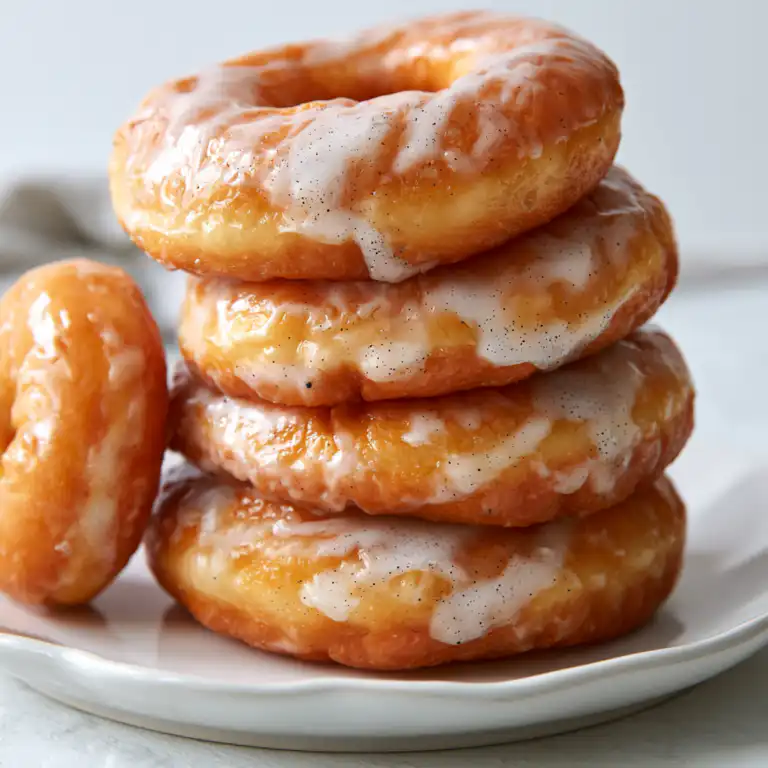
Indulge in incredibly soft, fluffy sourdough donuts with a delicate tang and sweet vanilla glaze, perfect for a special treat.
- Prep Time: 30
- Cook Time: 15
- Total Time: 960
- Yield: 8-9 donuts
- Category: Dessert
- Method: Frying
- Cuisine: American
Ingredients
- 20 grams unfed starter
- 55 grams milk (1/4 cup) for starter
- 15 grams sugar (scant 1 Tablespoon) for starter
- 110 grams bread flour (3/4 cup) for starter
- 160 grams milk (1/2 cup + 3 Tablespoons) for tangzhong
- 35 grams bread flour (1/4 cup) for tangzhong
- 300 grams bread flour (2 cups + 1 Tablespoon) for dough
- 66 grams sugar (1/3 cup) for dough
- 6 grams salt (1 teaspoon) for dough
- 1 egg room temperature
- all the sweet stiff starter
- all of the tangzhong
- 55 grams milk, room temperature (1/4 cup) for dough
- 70 grams unsalted butter, room temperature (5 Tablespoons)
- neutral oil for frying
- 430 grams powdered sugar (3 cups + 1/3 cup) for glaze
- 95 grams hot water (1/3 cup + 1 Tablespoon) for glaze
- 6 grams vanilla paste or extract (1 1/2 teaspoons) for glaze
- pinch of salt for glaze
Instructions
- The night before, prepare the sweet stiff starter.
- Add unfed starter, warm milk, and sugar to a bowl.
- Whisk until combined.
- Add 110 grams bread flour and mix until a shaggy dough forms.
- Place the dough onto a clean work surface.
- Knead until a smooth dough ball forms.
- Return the dough to the bowl.
- Cover with plastic wrap.
- Leave to triple in size (about 12 hours at 70°F).
- Before mixing the donut dough, prepare the tangzhong.
- Add 160 grams milk and 35 grams bread flour to a small saucepan.
- Whisk until flour is incorporated.
- Bring to medium heat.
- Whisk continuously until a thick paste forms (about 4-5 minutes).
- Remove saucepan from heat.
- Allow the tangzhong to cool completely.
- Spread tangzhong over a large plate, cover with plastic wrap, and place in fridge to cool quickly if needed.
- In a stand mixer bowl with a dough hook, add 300 grams bread flour, 66 grams sugar, and 6 grams salt.
- Whisk dry ingredients briefly.
- Add the room temperature tangzhong, room temperature egg, and 55 grams milk.
- Divide the sweet stiff starter into 15-20 pieces.
- Add the sweet stiff starter pieces to the mixing bowl.
- Mix on low/stir speed for 2-3 minutes until all ingredients are incorporated and a stiff dough forms.
- While still mixing on low, add 70 grams butter one tab at a time.
- Allow each tab of butter to fully incorporate before adding more.
- Once all butter is added, increase to medium speed (speed 2).
- Knead the dough for 10-15 minutes more or until it passes the windowpane test.
- Place the dough in a lightly greased straight-edge bowl.
- Cover the bowl.
- Leave to double in size (about 4-5 hours at 75–78°F).
- Pour the dough onto a lightly floured work surface.
- Dust the top of the dough with more flour.
- Roll the dough out to ½-¾ inch thick with a floured rolling pin.
- Cut out 8-9 donuts using a donut cutter.
- Place each donut and donut hole on its own square of parchment paper.
- Place parchment squares with donuts onto a rimmed baking sheet.
- Cover the baking sheet.
- Leave to rise until doubled in size and puffy (about 1-2 hours at 77°F, or until they jiggle when shaken and pass the finger poke test).
- Alternatively, cover and refrigerate donuts overnight for a slower second rise.
- Just before the donuts complete their second rise, preheat 2 inches of neutral oil to 360°F in a heavy-bottom pot or cast iron skillet.
- Once donuts have completed their second rise, carefully place 2-3 donuts (with parchment paper) in the hot oil at a time.
- Use kitchen tongs to remove the parchment paper after about 10 seconds.
- Fry each donut for 2 ½ minutes total, flipping halfway through.
- Use a slotted spoon to carefully remove golden brown donuts.
- Place fried donuts on a wire rack to drain.
- Ensure oil temperature returns to 360°F before frying the next batch.
- Whisk together powdered sugar, hot water, vanilla paste/extract, and a pinch of salt in a medium bowl until smooth.
- Dip each side of the fried donut in the glaze.
- Allow any excess glaze to drip off.
- Place glazed donuts back on the wire rack to dry.
- Wait about an hour until the donuts are fully set before enjoying.
Notes
Ensure your sweet stiff starter has tripled in size for the best rise.
Cool the tangzhong completely before adding to the dough; warm tangzhong can hinder yeast activity.
Don’t rush the second proofing; truly puffy donuts are essential for a light texture.
Always use a thermometer to maintain the oil temperature at 360°F for perfect frying results.

![Easy Southern Peach Cobbler [with Canned Peaches]](https://theflakytruth.com/wp-content/uploads/2026/08/cmswa1vwj00lb102k5xxpcxh8-hero-768x768.webp)


![Easy Southern Peach Cobbler [with Canned Peaches]](https://theflakytruth.com/wp-content/uploads/2026/08/cmswa1vwj00lb102k5xxpcxh8-hero-300x300.webp)