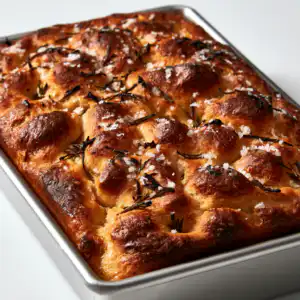
There’s something incredibly satisfying about baking bread at home, especially when it’s sourdough. I remember the first time I pulled a golden, bubbly loaf of focaccia from my oven – the aroma filled the whole house! This recipe for Sourdough Focaccia in a Loaf Pan brings all that joy and deliciousness right to your kitchen, in a super manageable size. It’s perfect for a weeknight dinner or a cozy weekend treat.
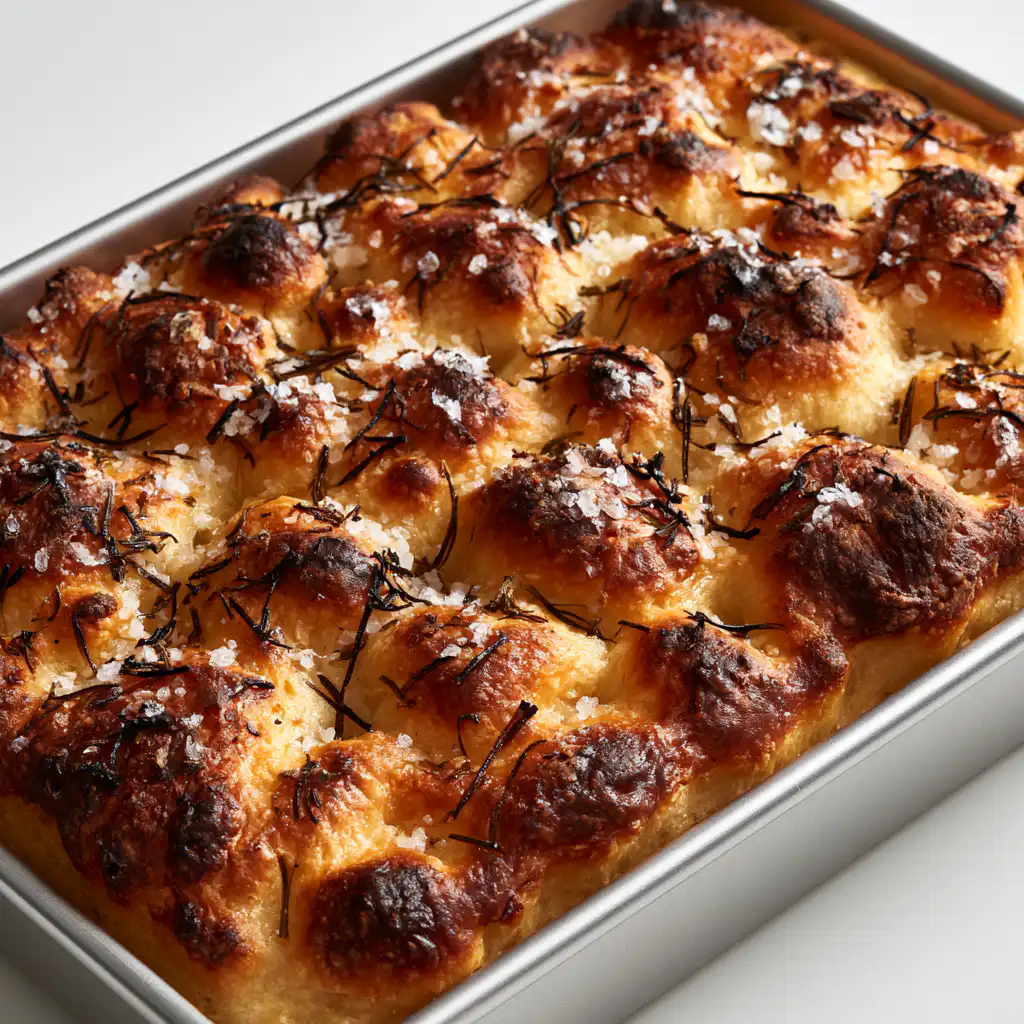
Why You’ll Love This Sourdough Focaccia in a Loaf Pan
- It’s so easy to make in a loaf pan, which means no large baking sheets are needed!
- The texture is heavenly – crispy on the outside, incredibly soft and airy on the inside.
- That signature sourdough tang adds amazing depth of flavor that’s just irresistible.
- It’s versatile! Enjoy it plain, with olive oil and balsamic, or piled high with your favorite toppings.
Ingredients You’ll Need
- Active Sourdough Starter: This is the heart of your sourdough focaccia, providing the natural leavening and wonderful tangy flavor. Make sure it’s active and bubbly!
- Filtered Water: Using filtered water can make a difference in your sourdough, as chlorine in tap water can sometimes inhibit starter activity.
- Bread Flour: This flour has a higher protein content, which is key for developing the gluten structure needed for that classic chewy focaccia texture.
- Salt: Don’t skip the salt! It’s crucial for flavor and also helps control the fermentation process.
- Oil (for pan & drizzling): Olive oil is traditional for focaccia, adding richness and helping with that golden crust.
- Flaky Salt: This is for finishing – it adds a lovely pop of texture and a burst of salty flavor to every bite.
How to Make Sourdough Focaccia in a Loaf Pan Step by Step
First things first, you’ll mix your active sourdough starter with filtered water until it looks milky. Then, you’ll add your bread flour and salt. Don’t worry if the dough feels super sticky and wet; that’s totally normal for this high-hydration recipe! Give it a good mix until all the flour is incorporated, then cover it up and let it rest for at least 30 minutes. This rest period is important for the flour to fully hydrate.
Next up are the stretch and folds. This is where the magic happens and you develop the dough’s strength. With slightly wet hands, gently stretch and fold sections of the dough over itself, rotating the bowl as you go. You’ll do this a few times until the dough starts to look smoother. After that, you’ll gently cup and tuck the dough underneath itself to form a smooth ball. Cover it again and let it bulk ferment in a warm spot. This is the longest part, taking about 8-10 hours in a 70°F kitchen, but remember to look for visual cues like doubling in size and visible bubbles!
Once your dough has doubled, it’s time to shape it into your loaf pan. Pour olive oil on the bottom of the 9×5 metal loaf pan (about 28 grams) and spread it evenly all over the bottom and the sides, then gently release the dough and carefully fold it into a tri-fold shape before placing it seam-side down. Cover it again and let it rise until it’s just under the rim of the pan, which can take another 3-4 hours. Finally, preheat your oven to 425°F. Drizzle more olive oil on the dough, grease your fingers, and gently press down to create those signature dimples. Sprinkle with flaky salt and any other toppings you love, then bake until golden brown, covering with foil for the last half of the baking time to ensure it cooks through.
My Top Tips for Success
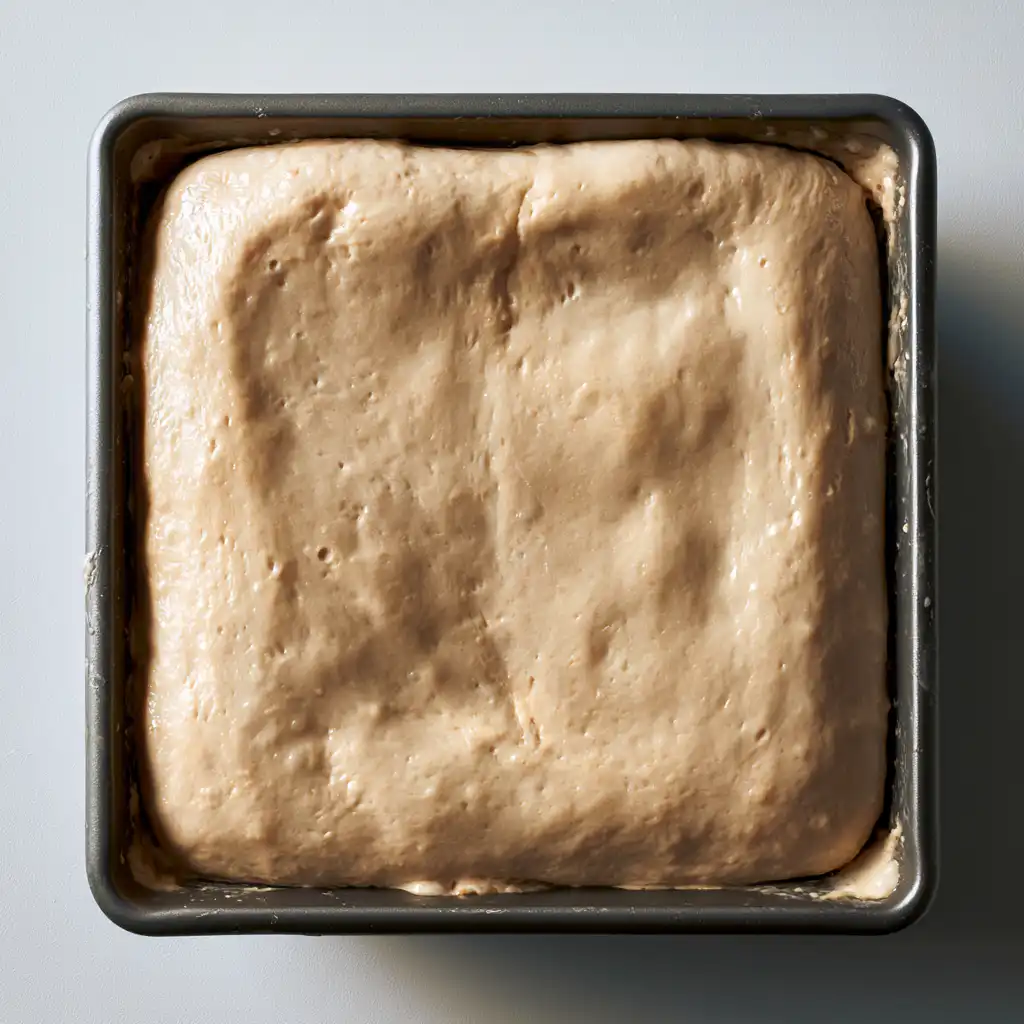
- I always use a straight-edge bowl for mixing; it really helps you see how much the dough has risen during bulk fermentation.
- In my experience, using slightly wet hands for the stretch and folds prevents the dough from sticking too much.
- Trust me on this one: don’t over-dimple the dough! Gentle presses are key to keeping those lovely air pockets intact.
- If you’re adding fresh herbs, coat them lightly in oil first to prevent them from burning in the oven.
- Always look for the signs of fermentation (doubled, bubbly, jiggly) rather than just watching the clock, as rise times vary.
Common Mistakes to Avoid
- Not letting the dough rest enough: If you try to work the dough too soon after mixing, it will be very resistant. The initial rest allows the gluten to relax.
- Over-dimpling the dough: Pressing too hard or too many times can pop all the air bubbles, leading to a dense focaccia instead of a light and airy one.
- Not using enough oil: Oil is crucial for focaccia! It prevents sticking, adds flavor, and contributes to a beautiful crust. Don’t be shy with it.
- Baking at too low a temperature: Focaccia needs a hot oven to get that quick rise and golden crust. A lower temperature can result in a pale, chewy loaf.
How to Store Sourdough Focaccia in a Loaf Pan
- Room Temperature: Store in an airtight container or a bread bag for up to 2 days.
- Refrigerator: Not recommended, as it can dry out the focaccia and make it stale quickly.
- Freezer: Wrap cooled focaccia tightly in plastic wrap, then in foil, and freeze for up to 1 month. Thaw at room temperature and reheat in a 350°F oven for 5-10 minutes.
Frequently Asked Questions
What if my sourdough starter isn’t active enough?
If your starter isn’t active and bubbly, it might not have enough strength to properly leaven the focaccia. Feed your starter and wait until it’s at its peak activity before using it for this recipe.
Can I use all-purpose flour instead of bread flour?
While bread flour is recommended for its higher protein content, you can use all-purpose flour. The focaccia might have a slightly less chewy texture, but it will still be delicious.
How do I know when the bulk fermentation is complete?
Your dough is ready when it has doubled in size, looks light and airy, jiggles when shaken, and has visible bubbles on the surface. These are more important indicators than a specific time.
What kind of loaf pan should I use?
A standard 9×5 metal loaf pan works perfectly for this recipe. Metal conducts heat well, helping to achieve a nice crispy crust.
I hope you give this Sourdough Focaccia in a Loaf Pan a try! It’s such a rewarding bake and tastes absolutely incredible. There’s nothing quite like fresh, homemade bread. I’d love to hear how yours turns out!
PrintSourdough Focaccia in a Loaf Pan
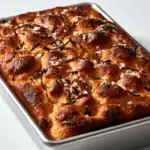
A deliciously soft and airy sourdough focaccia, perfectly baked in a convenient loaf pan for a smaller, manageable batch.
- Prep Time: 30
- Cook Time: 50
- Total Time: 720
- Yield: 8 servings
- Category: Bread
- Method: Baking
- Cuisine: Italian
Ingredients
- 50 grams active sourdough starter
- 400 grams filtered water
- 500 grams bread flour
- 10 grams salt
- Oil for pan & drizzling
- Flaky salt to taste
Instructions
- Mix the active starter and filtered water in a straight-edge bowl until milky.
- Add the bread flour and salt to the wet ingredients.
- Mix until all flour is incorporated; the dough will be sticky and wet.
- Cover the bowl with a plastic cover or plastic wrap.
- Let the dough rest for at least 30 minutes.
- Scrape the dough away from the sides of the bowl with a bowl scraper.
- With slightly wet hands, grab a section of dough and stretch it above the bowl.
- Fold the stretched dough over on top of the main dough.
- Rotate the bowl clockwise a quarter of the way.
- Repeat the stretch and fold process until you come full circle.
- Flip the dough ball with the seam side down.
- Cup the sides of the dough by scooping and tucking it underneath itself.
- Continue this cupping and tucking motion 10-20 times while turning the dough in a circle.
- Stop if the top of the dough begins to rip.
- Cover the bowl again.
- Place the dough in a warm place to rise for bulk fermentation.
- Allow the dough to bulk ferment until it has doubled in size, looks light and airy, jiggles when shaken, and has visible bubbles (approx. 8-10 hours at 70°F).
- Once the dough has doubled, pour 28 grams of olive oil on the bottom of a 9×5 metal loaf pan.
- Spread the olive oil evenly all over the bottom and sides of the pan.
- Release the dough gently from the sides of the bowl with a dough scraper.
- Tilt the dough into the prepared loaf pan.
- Take the top of the dough and fold it towards the middle.
- Lightly press the folded dough with your fingers so that it sticks.
- Repeat the same motion with the bottom of the dough to create a tri-fold.
- Turn the dough so it is vertical in the pan.
- Flip the dough with the seam side down.
- Cover the dough.
- Allow it to rise again until the dough is just under the rim of the loaf pan (approx. 3-4 hours at 70°F).
- Once the dough has doubled in size and is puffy/jiggly, preheat the oven to 425°F (218°C).
- Place the oven rack in the lower third of the oven.
- Place a small baking sheet on the oven rack underneath the loaf pan to catch any oil drips.
- Grease your fingers with olive oil to prevent sticking.
- Gently press your fingers into the sourdough focaccia until you lightly touch the bottom of the loaf pan.
- Drizzle oil on top after the first few dimples.
- Continue to dimple the dough until the entire surface has dimples.
- Be careful not to over-dimple the dough.
- Sprinkle the sourdough with flaky sea salt.
- Add any other desired toppings (e.g., fresh herbs coated in oil, cherry tomatoes, olives, cheese).
- Gently press the toppings into the dimpled focaccia.
- Bake for 20-25 minutes or until the top is perfectly golden brown.
- Cover the top with a piece of aluminum foil.
- Continue to bake for 20-25 more minutes or until the internal temperature is 205°F (96°C).
- Remove the Sourdough Focaccia from the oven.
- Allow it to cool in the loaf pan for a few minutes.
- Remove the bread from the pan and place it on a wire rack to cool completely.
- Once cooled slightly, slice and enjoy!
Notes
Always use an active, bubbly sourdough starter for best results.
Look for visual cues of fermentation rather than relying solely on the clock, as rise times can vary.
Be gentle during dimpling to maintain the airy texture of the focaccia.
For fresh herb toppings, toss them in a little olive oil before adding to prevent burning.

![Easy Southern Peach Cobbler [with Canned Peaches]](https://theflakytruth.com/wp-content/uploads/2026/08/cmswa1vwj00lb102k5xxpcxh8-hero-768x768.webp)




![Easy Southern Peach Cobbler [with Canned Peaches]](https://theflakytruth.com/wp-content/uploads/2026/08/cmswa1vwj00lb102k5xxpcxh8-hero-300x300.webp)